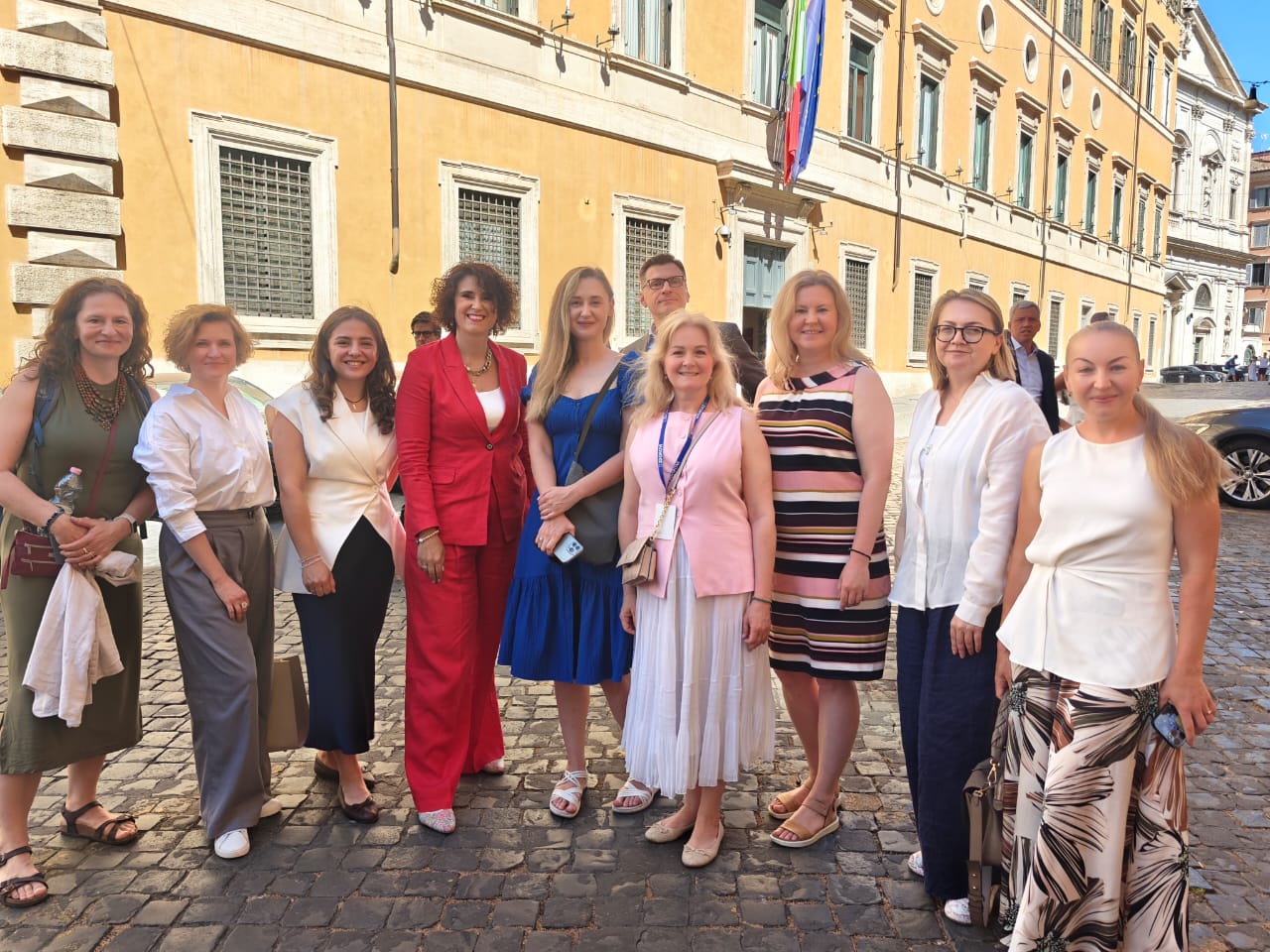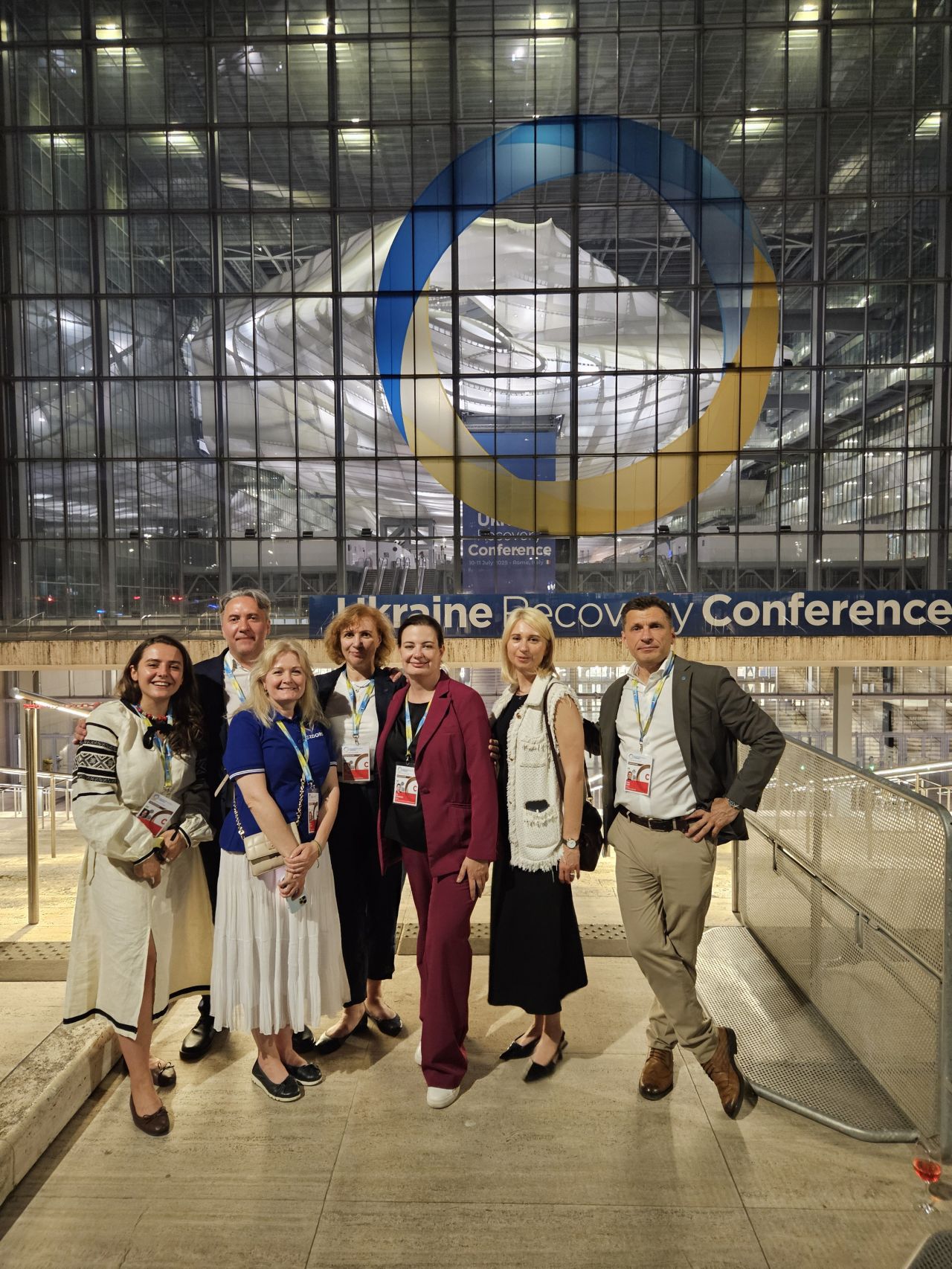
As part of the Ukraine Recovery Conference 2025 in Rome, the Alliance UA CSO, the NGO Humanitarian Platform in Ukraine (Платформа гуманітарних НУО в Україні), and Italian partners Caritas Italiana organised a discussion on “Empowered Ukraine: restarting from human capital.”
Capacity mapping
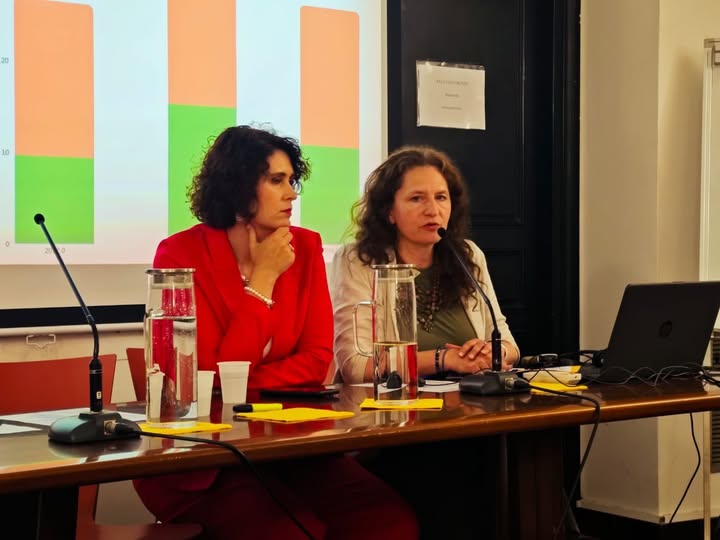
Yulia Sporysh from the NGO Girls and Tetiana Stavnychy from Caritas Ukraine presented a mapping of the capacities of Alliance UA CSO members and the NGO Humanitarian Platform in Ukraine in the areas of humanitarian response, early recovery and development. This research formed the basis for practical recommendations for social recovery.
Yulia Sporysh, founder and director of the NGO “Girls”, Tetiana Stavnychy, President of Caritas Ukraine
Tetiana Stavnychy, President of Карітас України:
“We already have models that work. It is time to act together to move from rapid response to sustainable solutions. The Alliance of Ukrainian Civil Society Organisations, Caritas and partners is a bridge between the needs of people and communities and the capabilities of donors.”
Dr Yuliya Sporysh, founder and director of the NGO Girls:
“We presented the results of a study on the contribution of the public sector to supporting Ukrainians. Our main message is that civil society is an influential, significant and reliable partner for both business and the state. We have mobilised significant resources, reach millions of people and work systematically. It is important to maintain this partnership, develop cooperation and actively communicate with all stakeholders.”
Main topics of discussion
- the role of civil society as a transformational partner;
- effective solutions for vulnerable groups;
- partnership between NGOs, business and the state as the basis for sustainable development.
Key points
Viktor Lyakh, President of the East Europe Foundation (EEF):
“Rebuilding Ukraine is not just about physical infrastructure. It is a chance to rethink the state: to make it transparent, effective, and close to everyone. Digital technologies have become a key element of this process. They provide citizens with access to services and enable informed decision-making.”
Oksana Kuyantseva, Member of the Board. PR and Communications Coordinator at the БФ “Схід SOS” | CF “East SOS”:
“Donors and the public sector face two key challenges. The first is to retain the professional teams that provide assistance to the affected population. Funding cuts are already leading to the loss of these teams, even though they possess unique expertise. The second is that humanitarian programmes must include support for relocated communities from temporarily occupied territories. After all, it is these communities that will eventually return to the liberated lands to rebuild them.”
Anna Biloshapka, Development Director at SpivDiia Charity Foundation:
“Civil society is not a supporting structure, but a driving force for fair and people-oriented reconstruction. Partnership with us is not symbolic; it is critically necessary. We see how Ukrainians are moving from crisis to stability, from survival to self-reliance — and civil society organisations are an important part of this process.”
Daria Kukurika, Executive Director of the The League of the Strong:
“We cannot build a new Ukraine according to the old rules. Society is changing, and the number of people with disabilities is growing, including as a result of the war. But only 15–17% of them are employed. This is a call to action.”
Natalia Tulinova, Founder and Director of ZDOROVI | New Medicine for Ukraine:
“Investing in healthcare is the right political focus. It is a strategic choice in favour of a sustainable, productive nation. Without prioritising healthcare, there can be no recovery and no future. Doctors, nurses and other healthcare workers are the living capital without which neither stability nor development of society in Ukraine is possible.”
Olesya Zaluska, Director of Economic Cooperation Development at Mercy Corps Ukraine:
“Mercy Corps supports resilience and rebuilding by providing reskilling programs in farming, green energy, construction, and electrical work, empowering individuals to lead recovery efforts in their communities. True reconstruction goes beyond infrastructure; it strengthens social ties, promotes inclusion, and creates opportunities for even the most vulnerable to be active agents of change. Through shared projects and local participation, communities can rebuild more sustainably.”
Natalia Klimova, Deputy Executive Director of ISAR Ednannia:
Non-governmental organisations are already covering all stages of response, from evacuation to reintegration. That is why they should be full participants in the reconstruction process.
Mila Leonova, Director of the Alliance UA CSO:
“The Alliance UA CSO already unites 26 organisations. Ten of them are present at this conference, and each one speaks about sustainability, human dignity, and partnership.”