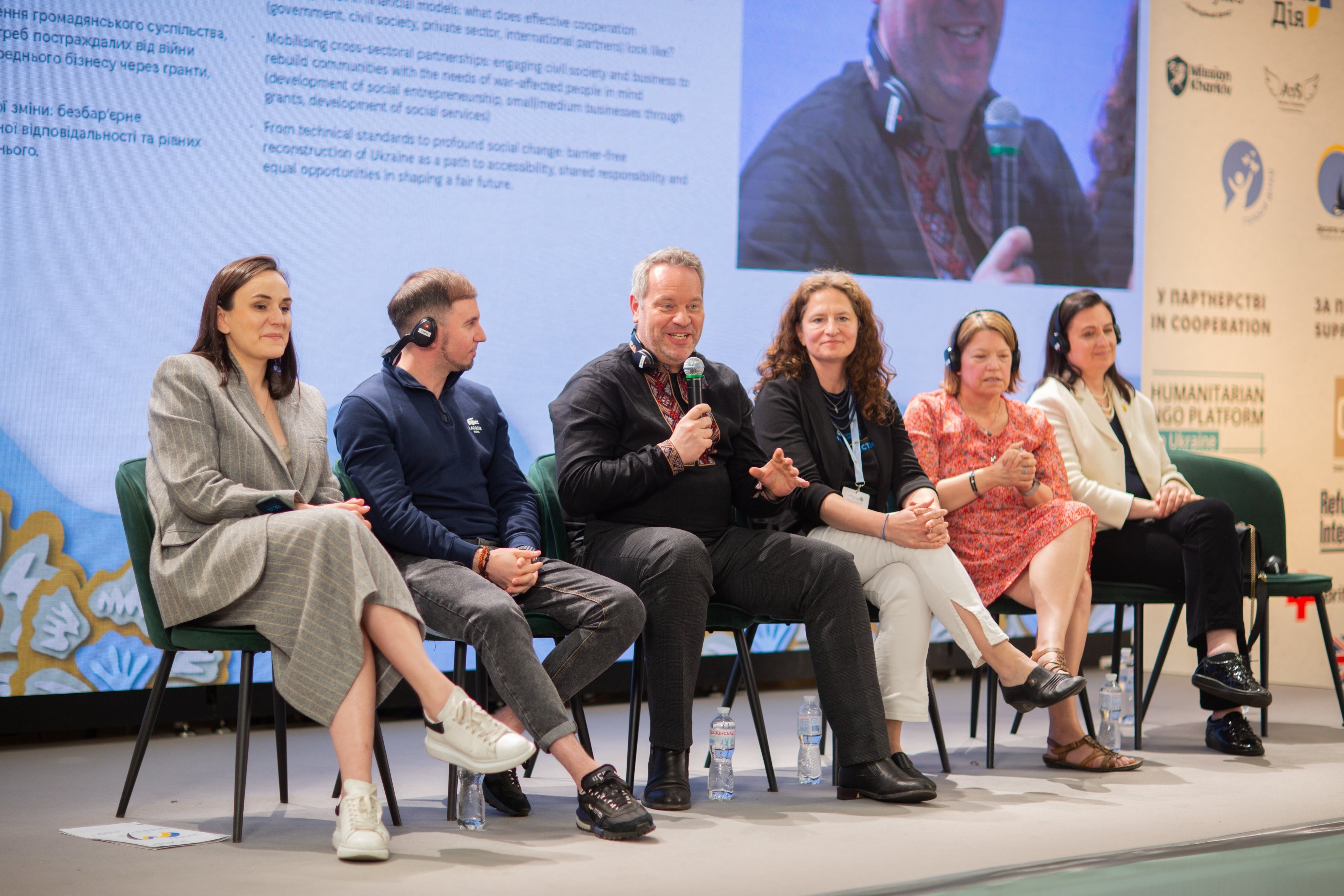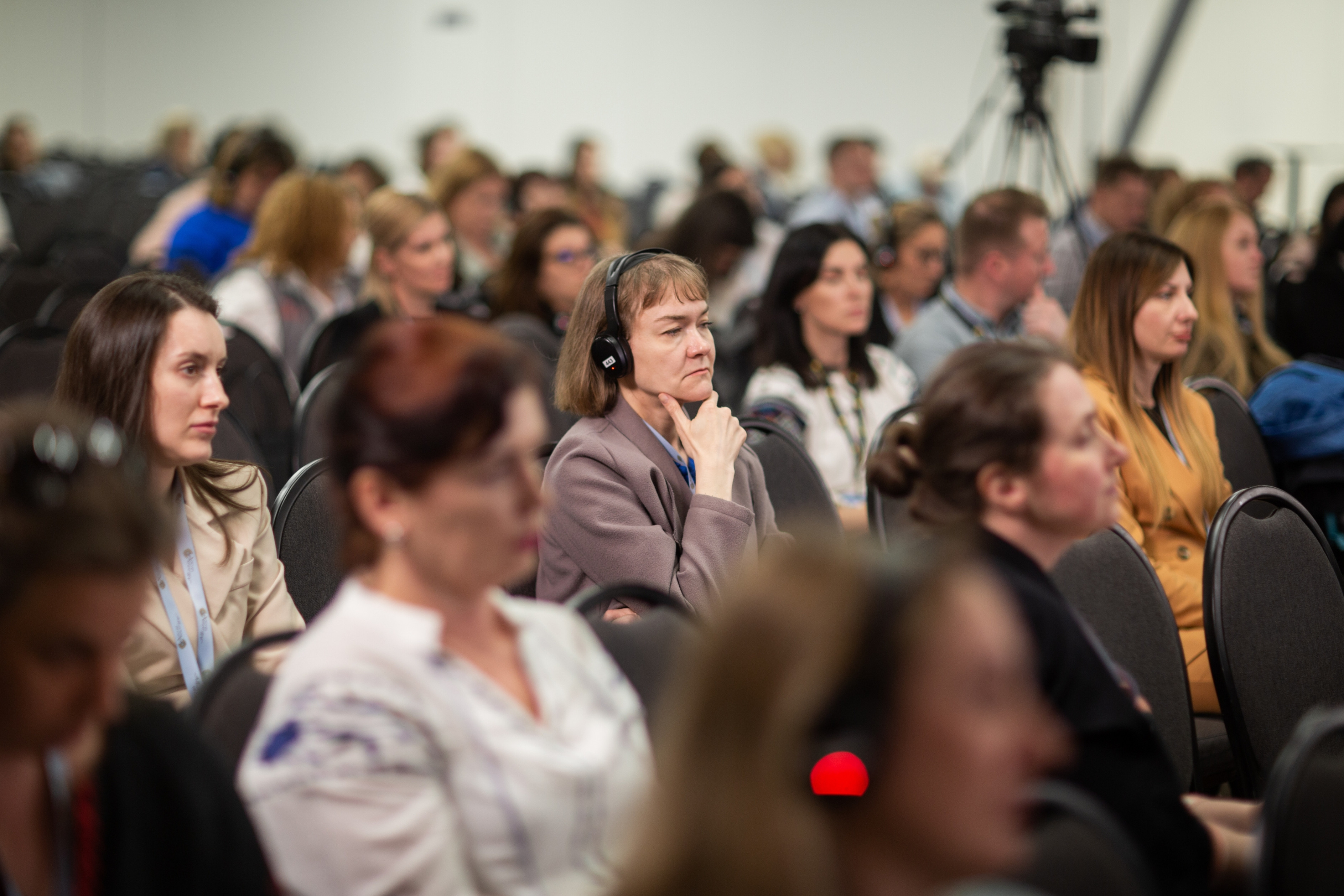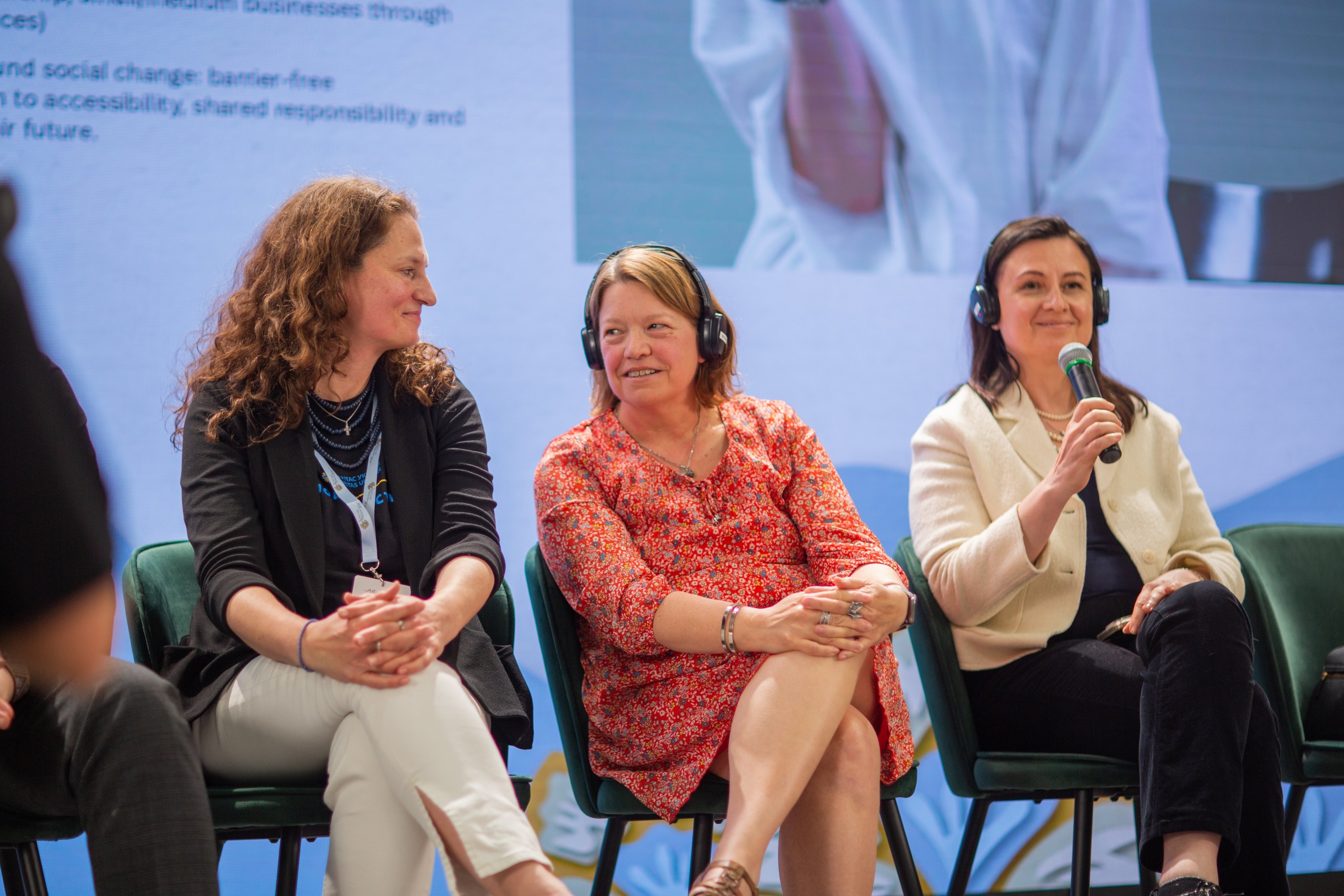
The upcoming URC2025 in Rome is a pivotal opportunity for Ukraine to solidify a new recovery model built on partnership, inclusion, and sustainability. Developing a joint sectoral position — a collaborative initiative of Alliance UA CSO and the Humanitarian NGO Platform in Ukraine — became a central theme at the 3rd Annual Ukrainian Aid Leadership Conference.
“Ukraine’s recovery must be an inclusive, partnership-driven, values-oriented process, where civil society, local governance, and business jointly shape a shared vision for the future.”
Mapping Capacity
Camilla Corradin, Director of the Humanitarian NGO Platform in Ukraine, presented a detailed capacity map of 35 national and 46 international NGOs. Operating in all 24 regions and Kyiv, these organisations have delivered 69 million instances of aid with an aggregate budget of €4.4 billion.
The Cross-Sector Model: A Functional Triangle
“We must forge a collaborative triangle between business, local self-government, and civil society to define the recovery we collectively wish to build. It extends beyond infrastructure — it encompasses values, accessibility, dignity, and quality of life for all.” — Tetiana Lomakina, Presidential Commissioner for a Barrier-Free Environment
The State: Openness to Co-Creation
“Four million people represent four million lives. We cannot integrate them into the economy through state efforts alone. Civil society amplifies our capacities, disseminates information, and shapes effective policies.” — Tetiana Berezhna, Deputy Minister of Economy of Ukraine
Local Level: CSOs as Institutional Pillars
“The war will end; international organisations will depart. Those who remain are the local communities. Let us invest in developing local civil society — it will form the bedrock of recovery.” — Viktor Sikalenko, Mykolaiv Development Agency
In Mykolaiv, CSOs comprise 50 % of strategic-planning working groups and sit on communal enterprise supervisory boards.
International Partners: Sustainability and Trust
“Conferences must leave behind not just resolutions, but enduring platforms. Skills-building alliances we supported have increased employment and bolstered local businesses — genuine support reaches the people.” — Marcus Koll, Head of Cooperation, German Embassy in Kyiv
From Organic Interaction to Systemic Partnership
“In 2022 we acted without asking whose ‘job’ it was; we invested because we are one society. This experience must now become the foundation for formalised cooperation.” — Tetiana Stawnychy, President, Caritas Ukraine
Civil Society: Accountability, Inclusion, Innovation
“Effective government is impossible without an effective civil society. We need flexible funding mechanisms that incorporate the experience and vision of local organisations.” — Vicki Aken, Response Director for Ukraine, Mercy Corps
Key Conclusions for URC2025
- Civil society is a co-creator of policy, not an add-on.
- Local CSOs are the foundation of sustainable recovery.
- Conferences should leave behind enduring mechanisms for cooperation.
- Inclusion, partnership, and trust are core recovery principles.
- URC2025 will showcase what already works — rebuilding Ukraine together as state, communities, business, and civil society.
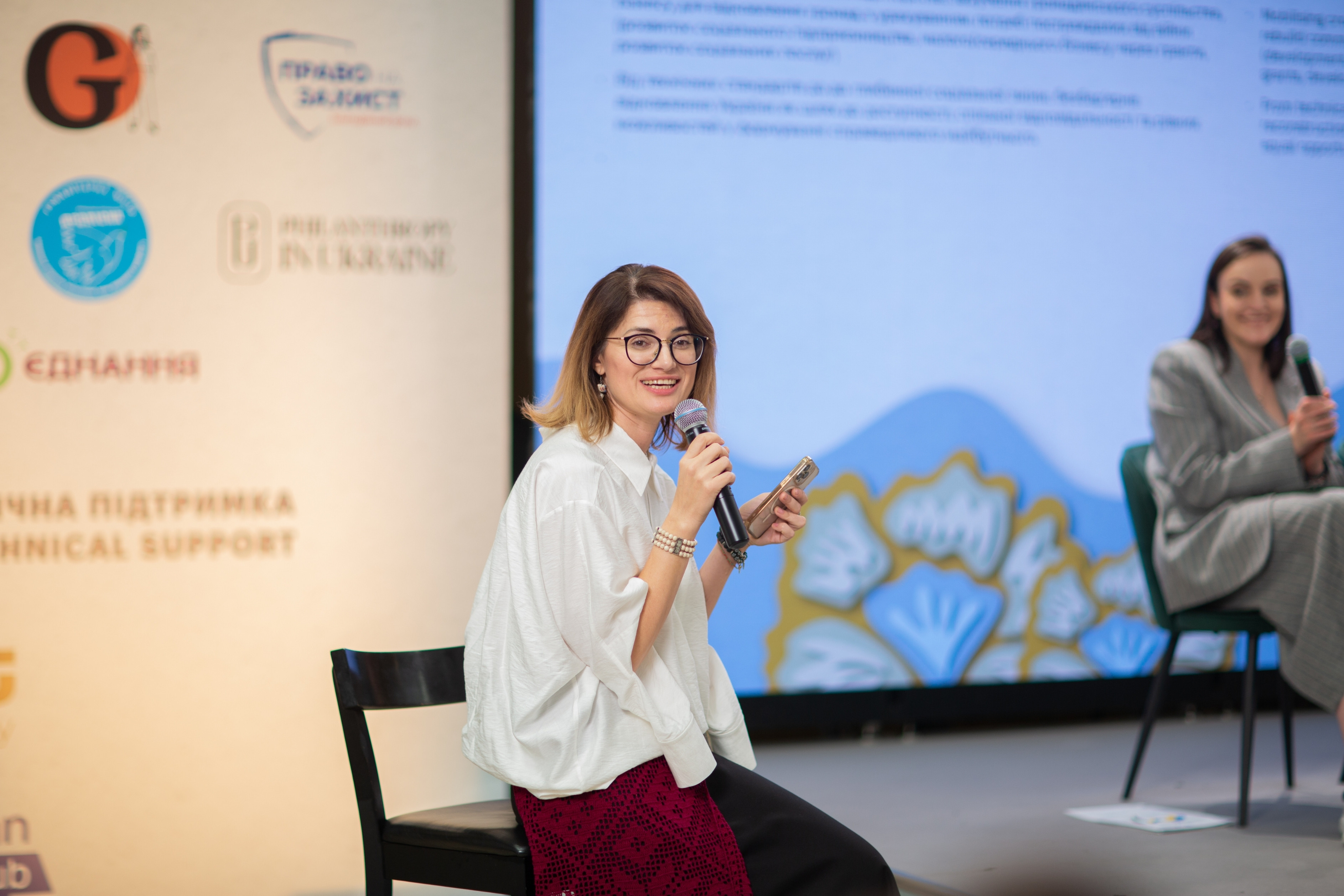
The discussion was expertly moderated by Marina Saprykina, President of CSR Ukraine, who fostered constructive and open dialogue among participants.