From Reactiveness to a New Recovery Architecture:
Kyiv Panel Discussion Explores the Role of Government, Private Sector, and Civil Society in Ukraine’s Recovery
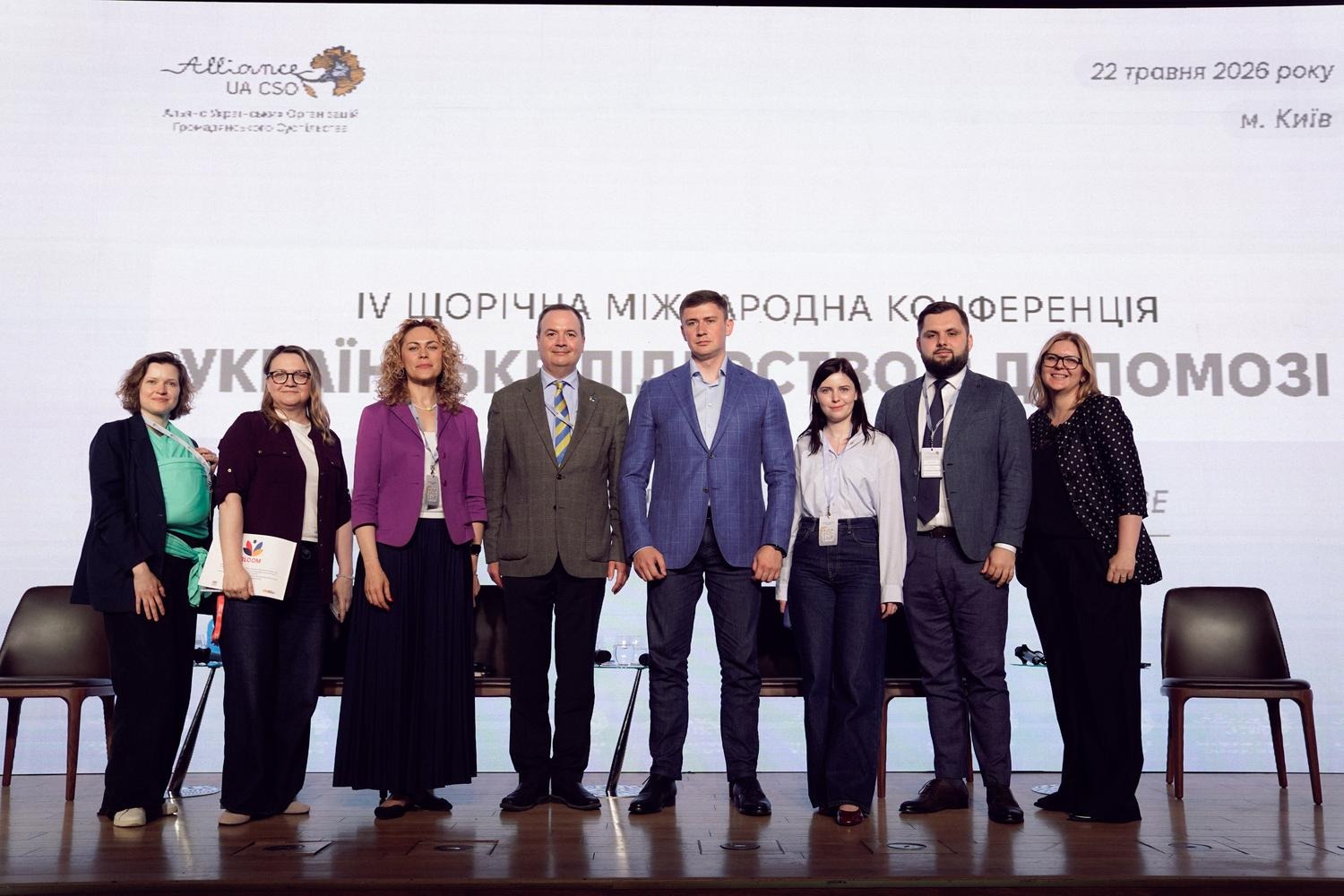
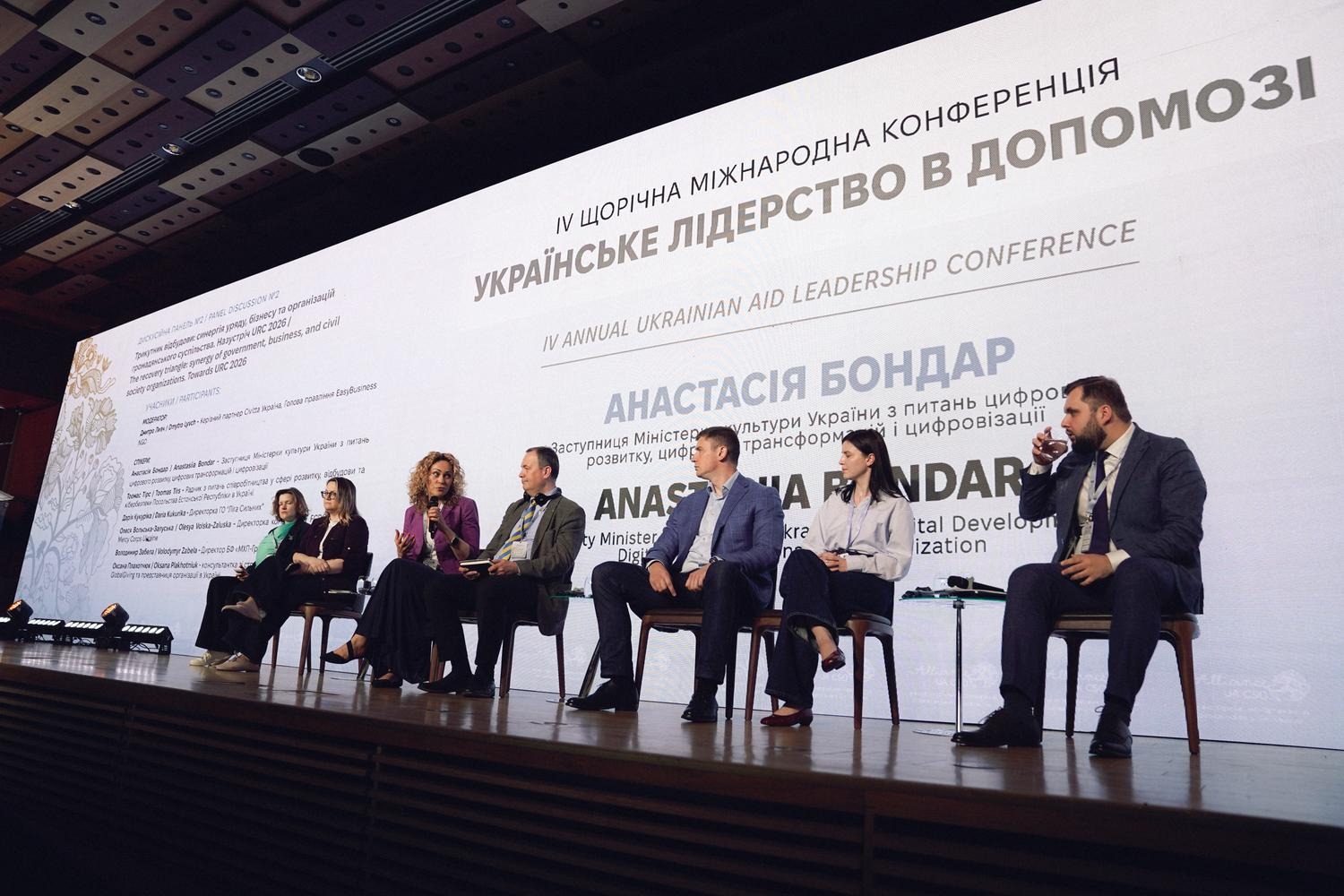
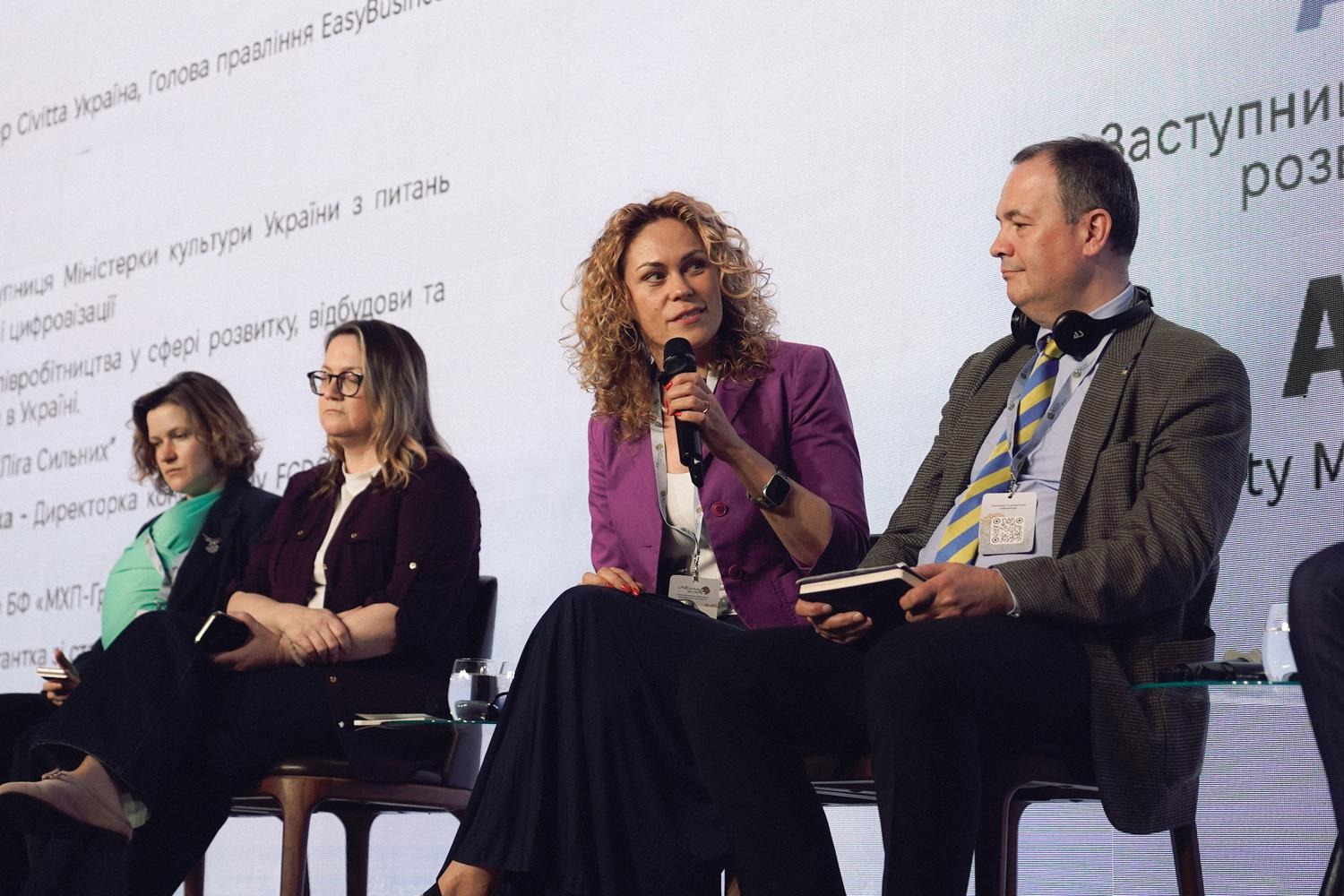
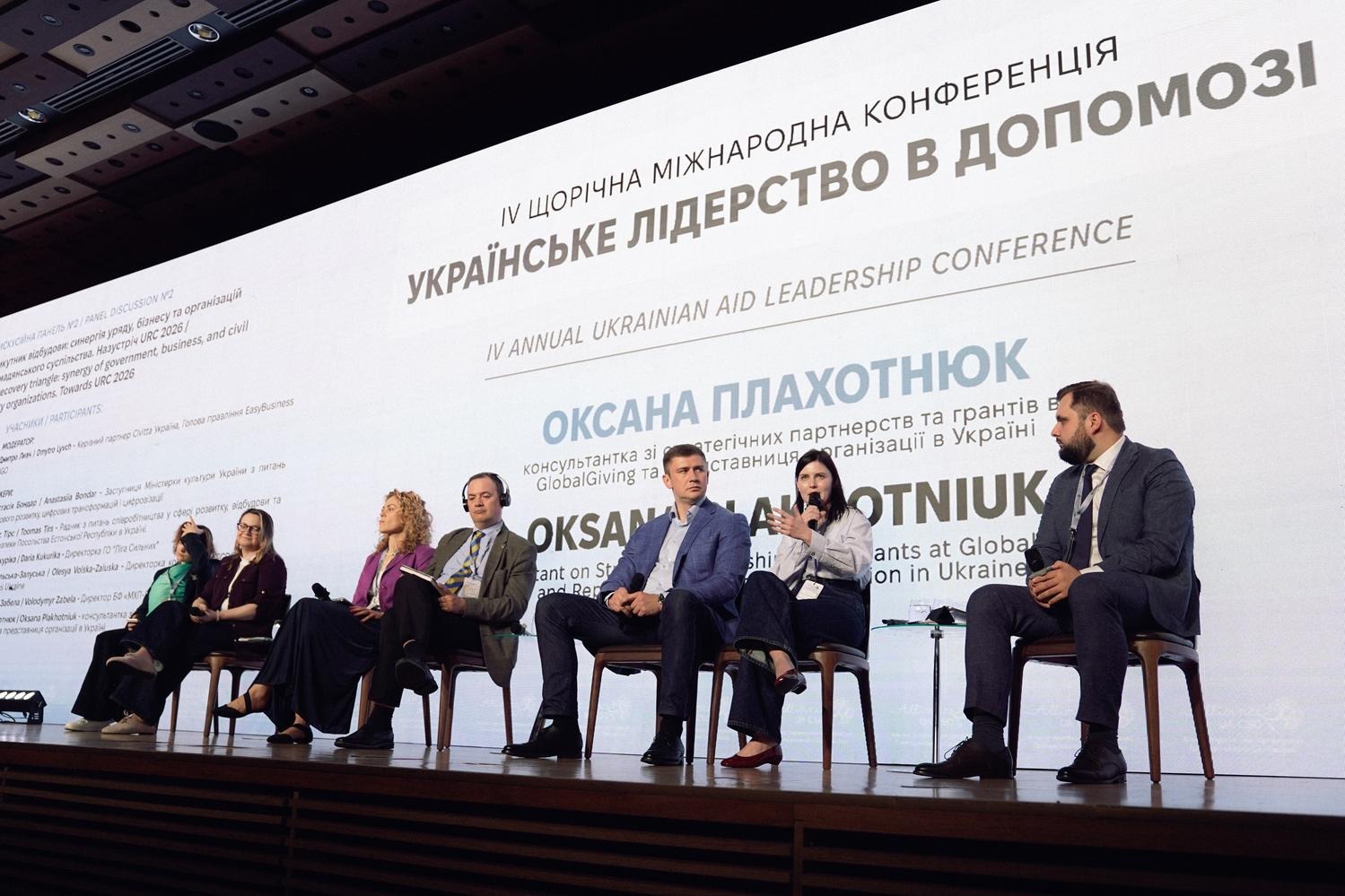
On May 22, the panel discussion “Ukraine’s recovery triangle: the role of state, private sector and civil society. Towards URC 2026” took place as part of the IV Annual Ukrainian Aid Leadership Conference.
The discussion was moderated by Dmytro Lyvch, Managing Partner at Civitta Ukraine and Chairman of the Board of EasyBusiness. During the panel, he presented the initial findings of a study on the role of civil society in Ukraine’s recovery architecture.
The study is being conducted by CIVITTA in cooperation with the Alliance of Ukrainian Civil Society Organizations and supported by Refugees International (RI) and the Center for Disaster Philanthropy (CDP).
The discussion focused on the transition from fragmented recovery efforts to systemic cooperation between government, business, international partners, and civil society — particularly in the context of preparations for the Ukraine Recovery Conference 2026.
“The scale of Ukraine’s economy today is disproportionate to the scale of the recovery challenges. According to RDNA5 estimates, recovery needs have already reached $588 billion. That is why we must talk not only about financing or individual projects, but about a new architecture of interaction between government, business, communities, and civil society.”
Dmytro Lyvch, Managing Partner at Civitta Ukraine
Dmytro Lyvch emphasized that Ukraine’s recovery is not a linear process. The country is simultaneously moving through phases of humanitarian response, stabilization support, early recovery, large-scale reconstruction, and modernization. This requires entirely new coordination and partnership models.
He also noted that international experience demonstrates a common challenge across many countries: civil society tends to be highly effective during the early stages of response and recovery, but often loses influence during strategic planning and reconstruction phases.
“We are now at a point where we can avoid repeating others’ mistakes. Ukrainian civil society has already developed unique expertise in the context of crisis response and local mobilization. The next challenge is to integrate this capacity into formal recovery governance mechanisms.”
Dmytro Lyvch
Culture, Identity and Recovery
A separate part of the discussion focused on the role of culture and identity in recovery processes. Anastasiia Bondar, Deputy Minister of Culture of Ukraine for Digital Development, stressed that recovery must go far beyond infrastructure alone.
“The war is not only for territories per se. It is also a war for culture, language, history, and identity. And if our international partners openly acknowledge this, we must also explicitly recognize that culture must become part of the recovery agenda.”
Anastasiia Bondar, Deputy Minister of Culture of Ukraine for Digital Development
She emphasized that if the cultural dimension is not integrated into reconstruction now — from schools and shelters to public spaces — Ukraine risks losing the ability to build resilience and a sense of identity for years to come.
Anastasiia Bondar also referred to the principles of the New European Bauhaus, an initiative of the European Commission that combines the Green Deal with cultural and social transformation. She stressed that recovery must be not only functional and accessible, but also people-centered.
Key Issues Discussed
- the transition from aid-driven recovery to investment-led growth;
- the role of local leadership and communities in recovery governance;
- accessibility as an indispensable component of reconstruction;
- the need for long-term strategic planning;
- integration of civil society into decision-making processes.
Voices from the Panel
Dariia Kukurika, Head of the NGO “League of the Strong”, stressed that accessibility cannot remain a secondary issue in recovery.
“If we fail to ensure accessibility during reconstruction, Ukraine’s recovery risks becoming a cautionary tale. Accessibility is not only about physical access as such — it is also about access to services, information, economic opportunities, and participation in community life.”
Toomas Tiirs, Reconstruction Advisor at the Embassy of Estonia, emphasized the importance of long-term partnerships and strengthening local capacities.
“We do not want to simply build structures. We want to build relationships and help communities become more capable. Recovery is not about copying foreign models, but about jointly developing solutions adapted to the Ukrainian context.”
Volodymyr Zabela, Director of the MHP-Hromadi Foundation, added that recovery must begin with communities themselves and that communities should become active participants in reconstruction rather than passive aid recipients.
Olesia Volska-Zaluska from Mercy Corps Ukraine and Oksana Plakhotniuk from GlobalGiving spoke about the transformation of international aid, the importance of supporting local initiatives, and the gradual shift from humanitarian assistance to strengthening the economic capacity of communities.
Towards URC 2026
Successful recovery in Ukraine requires not only resources, but also a new culture of cooperation, a long-term strategic vision, and the systemic integration of civil society into recovery processes.
The main findings and conclusions of the discussion, as well as the study on the role of civil society in Ukraine’s future recovery architecture, will be presented during URC 2026 in Poland.